
Primary Antibody Matched Pairs

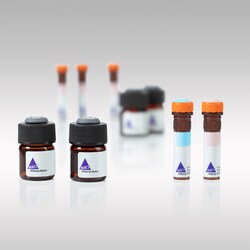
Miltenyi Biotec, Inc. CD58 (LFA-3)-VioBright V423, human, 30 t
Identification and enumeration of CD58 (LFA-3)+ cells by flow cytometry.
This product is subject to the following: Miltenyi Biotec, Inc. Terms and Conditions of Sale For Products and Services
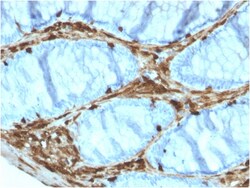
Biotium Annexin A1 / (Hairy Cell Leukemia Marker)(ANXA1/3566), Biotin conjugate, 0.1mg/mL
Annexin A1 belongs to the annexin family. It plays a role in glucocorticoid-mediated down-regulation of the early phase of the inflammatory response. In resting conditions Annexin A1 is localized to the cytoplasm. Upon activation it is mobilized to the membrane and secreted. Annexin A1 and contains 4 annexin repeats. A pair of annexin repeats may form one binding site for calcium and a phospholipid. Expression of the ANXA1 gene is upregulated in hairy cell leukemia (HCL). Detection of ANXA1 provides a simple, highly sensitive and specific assay for diagnosing HCL. Annexin A1 has also been found to be protective against DNA damage induced by heat in breast cancer cells, suggesting it is involved in tumor suppressive and protective activities, and also is associated with treatment resistance. Primary antibodies are available purified, or with a selection of fluorescent CF Dyes and other labels. CF Dyes offer exceptional brightness and photostability. Note: Conjugates of blue

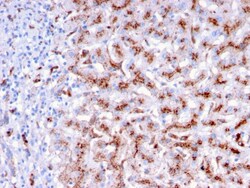
Biotium Cathepsin D (Tumor Marker)(CTSD/3276), CF647 conjugate, 0.1mg/mL
Cathepsin D is a ubiquitously expressed lysosomal aspartyl protease involved in the normal degradation of proteins. It is synthesized as an inactive 43 kDa preprocathepsin D that is cleaved and glycosylated to form a 46 kDa procathepsin D and then further cleaved to produce 28 kDa and 15 kDa subunits (heavy and light chains, respectively). Cathepsin D exhibits pepsin-like activity and plays a role in protein turnover and in the proteolytic activation of hormones and growth factors. Mutations in this gene play a causal role in neuronal ceroid lipofuscinosis-10 and may be involved in the pathogenesis of several other diseases, including breast cancer and possibly Alzheimer's disease. Primary antibodies are available purified, or with a selection of fluorescent CF Dyes and other labels. CF Dyes offer exceptional brightness and photostability. Note: Conjugates of blue fluorescent dyes like CF405S and CF405M are not recommended for detecting low abundance targets, because blu
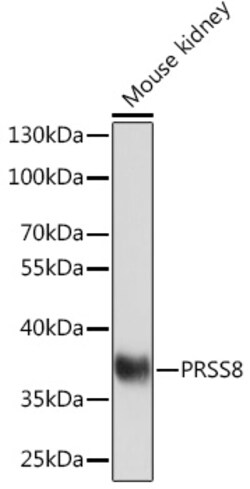
ABclonal Technology PRSS8 Rabbit pAb

This gene encodes a member of the peptidase S1 or chymotrypsin family of serine proteases. The encoded preproprotein is proteolytically processed to generate light and heavy chains that associate via a disulfide bond to form the heterodimeric enzyme. This enzyme is highly expressed in prostate epithelia and is one of several proteolytic enzymes found in seminal fluid. This protease exhibits trypsin-like substrate specificity, cleaving protein substrates at the carboxyl terminus of lysine or arginine residues. The encoded protease partially mediates proteolytic activation of the epithelial sodium channel, a regulator of sodium balance, and may also play a role in epithelial barrier formation.

Genscript Corporation HMGB1 Biotin His Human
High-mobility group box 1 (HMGB1) is a ubiquitous nuclear protein that promotes inflammation when released extracellularly after cellular activation stress damage or death HMGB1 operates as one of the most intriguing molecules in inflammatory disorders via recently elucidated signal and molecular transport mechanisms Treatments based on antagonists specifically targeting extracellular HMGB1 have generated encouraging results in a wide number of experimental models of infectious and sterile inflammation

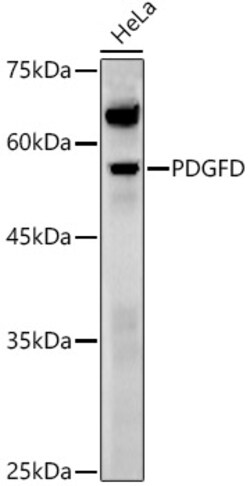
ABclonal Technology PDGFD Rabbit pAb
The protein encoded by this gene is a member of the platelet-derived growth factor family. The four members of this family are mitogenic factors for cells of mesenchymal origin and are characterized by a core motif of eight cysteines, seven of which are found in this factor. This gene product only forms homodimers and, therefore, does not dimerize with the other three family members. It differs from alpha and beta members of this family in having an unusual N-terminal domain, the CUB domain. Two splice variants have been identified for this gene.
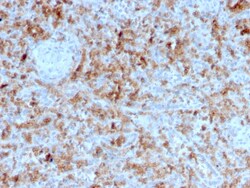
Biotium Granzyme B (NK/T-Cell Lymphoma Marker)(GZMB/3055), CF647 conjugate, 0.1mg/mL
Granzyme B is a member of the granule serine protease family stored specifically in NK cells or cytotoxic T cells. Cytolytic T lymphocytes (CTL) and natural killer (NK) cells share the ability to recognize, bind, and lyse specific target cells. They are thought to protect their host by lysing cells bearing on their surface 'nonself' antigens, usually peptides or proteins resulting from infection by intracellular pathogens. Granzyme B is crucial for the rapid induction of target cell apoptosis by CTLs in the cell-mediated immune response. Granzyme B is useful as a marker in the identification of NK/T-cell lymphomas. High percentages of cytotoxic T-cells have been shown to be an unfavorable prognostic indicator in Hodgkin's Disease. Primary antibodies are available purified, or with a selection of fluorescent CF Dyes and other labels. CF Dyes offer exceptional brightness and photostability. Note: Conjugates of blue fluorescent dyes like CF405S and CF405M are not recommende
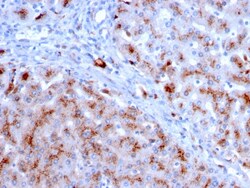
Biotium Cathepsin D (Tumor Marker)(CTSD/3083), CF740 conjugate, 0.1mg/mL
Cathepsin D is a ubiquitously expressed lysosomal aspartyl protease involved in the normal degradation of proteins. It is synthesized as an inactive 43 kDa preprocathepsin D that is cleaved and glycosylated to form a 46 kDa procathepsin D and then further cleaved to produce 28 kDa and 15 kDa subunits (heavy and light chains, respectively). Cathepsin D exhibits pepsin-like activity and plays a role in protein turnover and in the proteolytic activation of hormones and growth factors. Mutations in this gene play a causal role in neuronal ceroid lipofuscinosis-10 and may be involved in the pathogenesis of several other diseases, including breast cancer and possibly Alzheimer's disease. Primary antibodies are available purified, or with a selection of fluorescent CF Dyes and other labels. CF Dyes offer exceptional brightness and photostability. Note: Conjugates of blue fluorescent dyes like CF405S and CF405M are not recommended for detecting low abundance targets, because blu
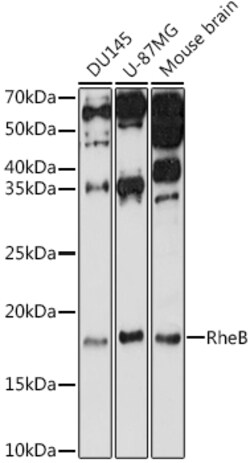
ABclonal Technology RheB Rabbit pAb
This gene is a member of the small GTPase superfamily and encodes a lipid-anchored, cell membrane protein with five repeats of the RAS-related GTP-binding region. This protein is vital in regulation of growth and cell cycle progression due to its role in the insulin/TOR/S6K signaling pathway. The protein has GTPase activity and shuttles between a GDP-bound form and a GTP-bound form, and farnesylation of the protein is required for this activity. Three pseudogenes have been mapped, two on chromosome 10 and one on chromosome 22.
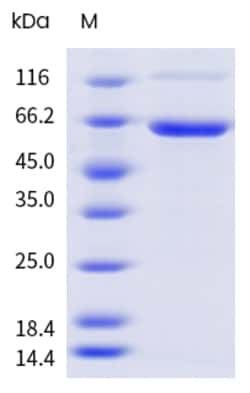
Sino Biological Recombinant Human DcR3/TNFRSF6B Protein (ECD, hFc & AVI Tag), Avi-tag Biotinylated 20 µg
A DNA sequence encoding the Human TNFRSF6B (O95407)(Met1-His300) was expressed with a c-terminal AVI tagged Fc region of human IgG1 at the C-terminus (Fc-AVI). The expressed protein was biotinylated in vivo by the Biotin-Protein ligase (BirA enzyme) which is co-expressed.
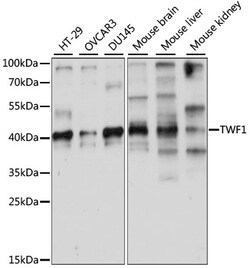
ABclonal Technology TWF1 Rabbit pAb
This gene encodes twinfilin, an actin monomer-binding protein conserved from yeast to mammals. Studies of the mouse counterpart suggest that this protein may be an actin monomer-binding protein, and its localization to cortical G-actin-rich structures may be regulated by the small GTPase RAC1.
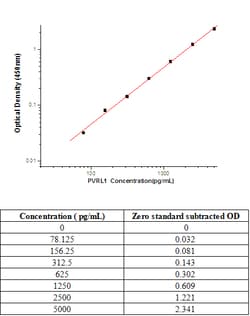
Sino Biological Human Nectin-1/PVRL1 Matched ELISA Antibody Pair Set
The Human CD111/Nectin-1/PVRL1 ELISA Pair Set is for the quantitative determination of Human CD111/Nectin-1/PVRL1.The Sino Biological ELISA Pair Set is a solid phase sandwich ELISA (Enzyme-Linked Immunosorbent Assay). It utilizes a monoclonal antibody specific for Human CD111/Nectin-1/PVRL1 coated on a 96-well plate. Standards and samples are added to the wells, and any Human CD111/Nectin-1/PVRL1 present binds to the immobilized antibody. The wells are washed and a horseradish peroxidase conjugated mouse anti-Human CD111/Nectin-1/PVRL1 monoclonal antibody is then added, producing an antibody-antigen-antibody "sandwich". The wells are again washed and TMB substrate solution is loaded, which produces color in proportion to the amount of Human CD111/Nectin-1/PVRL1 present in the sample. To end the enzyme reaction, the stop solution is added and absorbances of the microwell are read at 450 nm.

Meso Scale Discovery R-PLEX Human CNTF ASYQP
The R-PLEX Human CNTF Assay Kit from Meso Scale Discovery is a multiplex immunoassay for measuring Ciliary Neurotrophic Factor (CNTF) in human serum plasma and cell culture supernatants It uses electrochemiluminescence (ECL) detection technology offering high sensitivity a dynamic range of up to 5 logs and low sample volume requirements The kit includes a 96-well plate with capture antibodies ECL-labeled detection antibodies calibrators and necessary reagents Results are available in 3 5 hours using an MSD instrument This assay quantifies CNTF important for neuronal cell survival and differentiation
Genscript Corporation MSLN/Mesothelin 296-598 M593
Mesothelin also known as MSLN is a protein that in humans is encoded by the MSLN gene Cloning studies showed that the mesothelin gene encodes a precursor protein that is processed to yield mesothelin which is attached to the cell membrane by a glycophosphatidylinositol linkage and a 31-kDa shed fragment named megakaryocyte-potentiating factor (MPF) Although it has been proposed that mesothelin may be involved in cell adhesion its biological function is not known A knockout mouse line that lacks mesothelin reproduces and develops normally
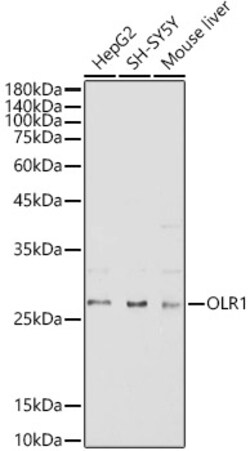
ABclonal Technology OLR1 Rabbit pAb
This gene encodes a low density lipoprotein receptor that belongs to the C-type lectin superfamily. This gene is regulated through the cyclic AMP signaling pathway. The encoded protein binds, internalizes and degrades oxidized low-density lipoprotein. This protein may be involved in the regulation of Fas-induced apoptosis. This protein may play a role as a scavenger receptor. Mutations of this gene have been associated with atherosclerosis, risk of myocardial infarction, and may modify the risk of Alzheimers disease. Alternate splicing results in multiple transcript variants.